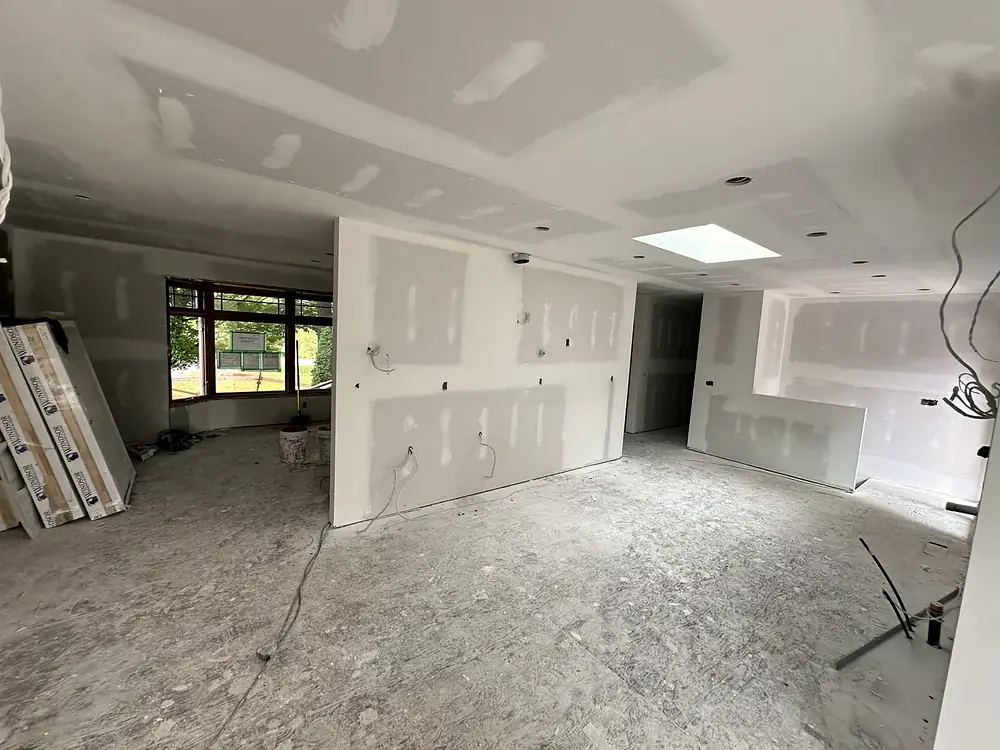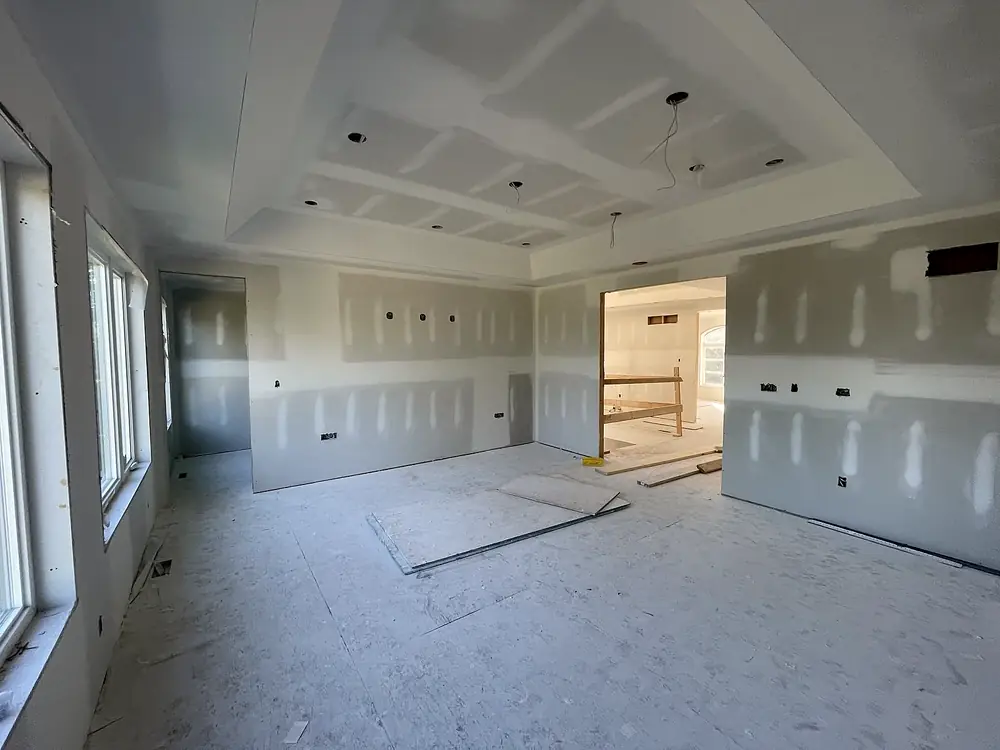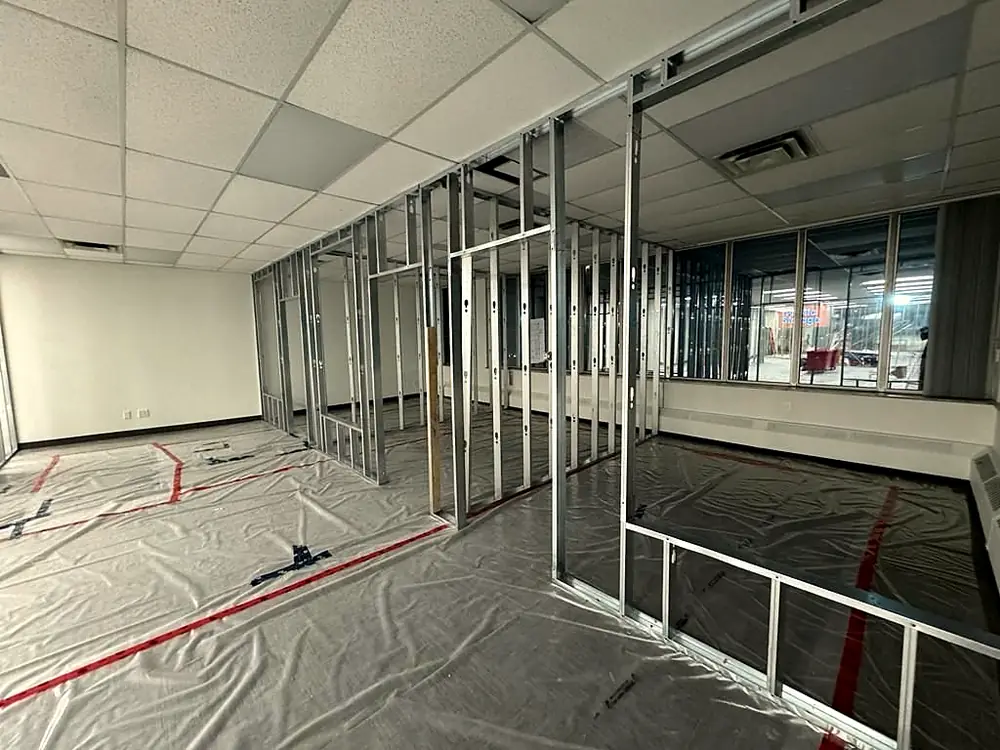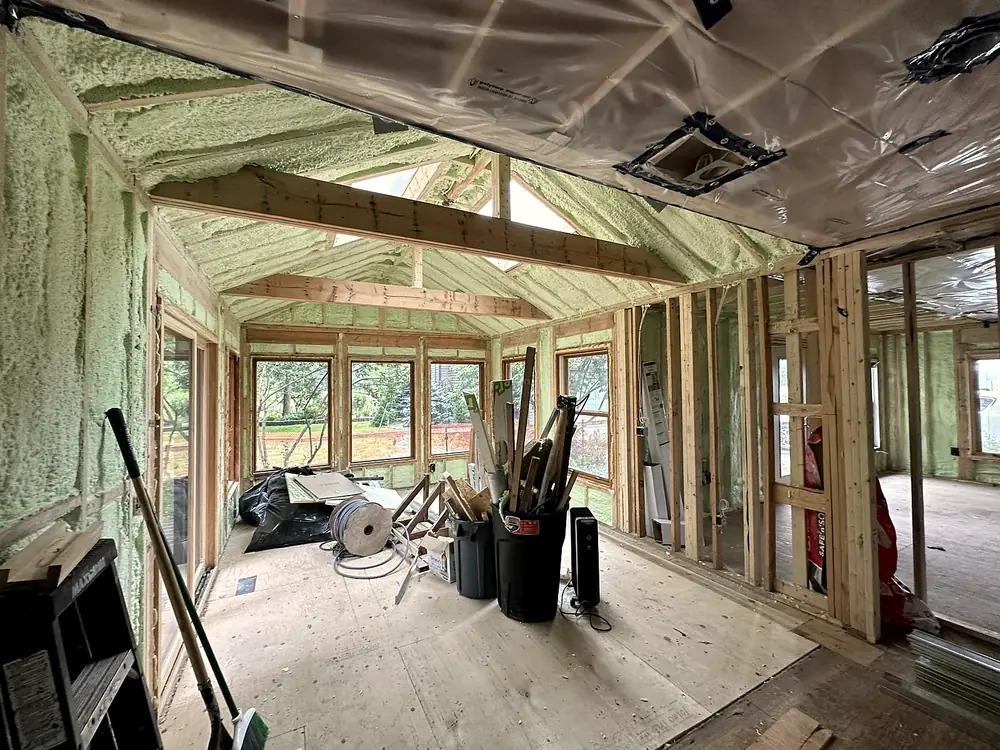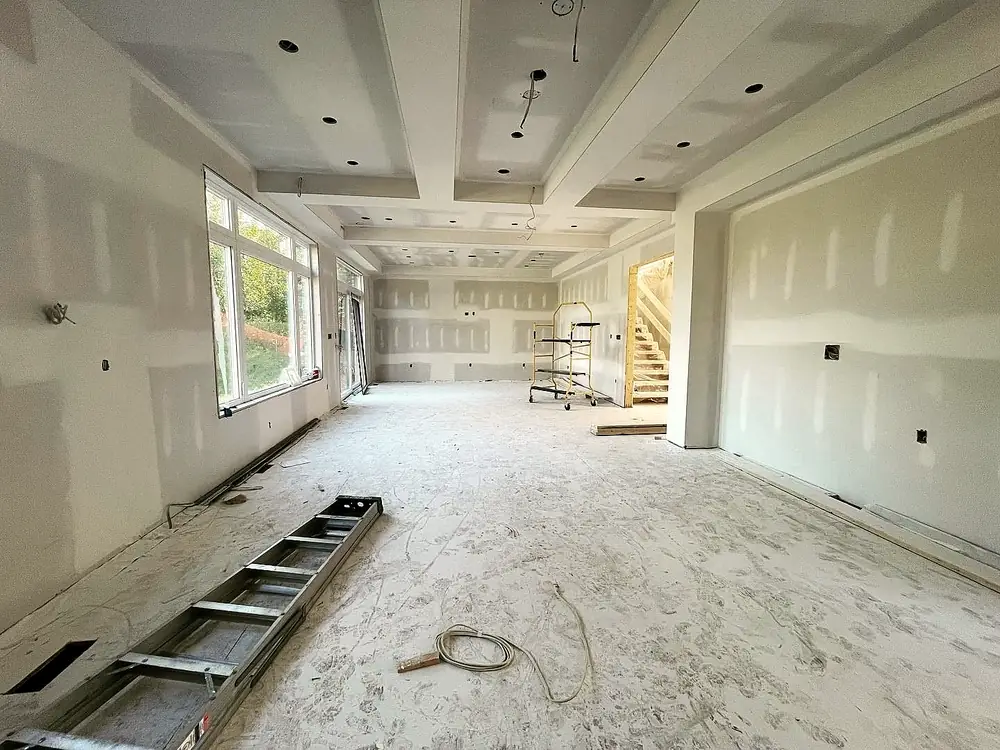
The phases that make up the timeline
- Board hanging: cutting and screwing drywall to the framing
- First coat taping: embedding tape and the first coat on every joint
- Drying: at least 24 hours per coat, more in cold or humid conditions
- Second coat: a fill coat, feathered wider than the first
- Third coat: the finish coat, feathered to full width
- Sanding: between coats and after the final coat
- Level 5 skim (if specified): a full skim coat plus a final sanding pass
Even the most experienced crew can't rush drying time. Compound that isn't fully dry shrinks and cracks, and the failures show up months later under paint. That's the most important thing to understand about drywall schedules, and it's why a contractor who promises an unrealistically fast turnaround is a red flag.
Real timelines by project type
| Project type | Timeline | Key variables |
|---|---|---|
| Single room renovation | 5–8 working days | Ceiling complexity, finish level |
| Full basement finish | 8–12 working days | Number of rooms, ceiling type |
| Main floor renovation | 10–15 working days | Kitchen and bath details |
| Custom home new build (3,000–5,000 sq ft) | 3–5 weeks | Coffered ceilings, Level 5 spec |
| Large luxury build (5,000+ sq ft) | 5–8 weeks | Multiple zones, sequencing |
| Commercial fit-out | 2–4 weeks | Fire-rated assemblies, T-bar |
The most common cause of delays
Other trades. Drywall can't start until rough electrical, plumbing, HVAC and insulation are complete and inspected. The drywall contractor showing up on time only matters if every trade before them finished on time. As a GC or homeowner, protecting your drywall start date means protecting every preceding trade's deadline.
What adds time to the schedule
- Cold weather. Below 13°C, joint compound won't cure properly. In winter builds the space must be heated before and during taping.
- High humidity. Common in Halton summers. Fans and dehumidifiers help but can't eliminate longer drying times.
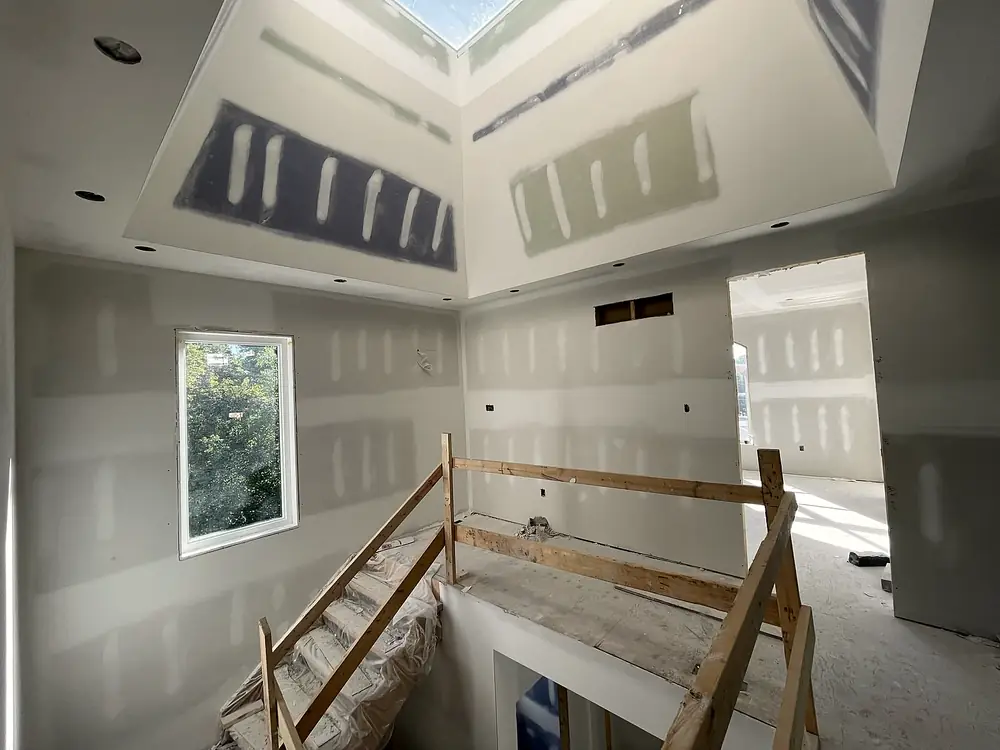
- Complex ceilings. Coffered ceilings, curved walls and multi-level tray ceilings add 30–50% to taping time compared with flat ceilings.
- Level 5 finish. Add 2–4 working days compared with Level 4. The skim coat and final sanding are significant extra steps.
- Access. Multi-storey homes, tight stairwells and occupied renovations slow down delivery and stocking.
How to keep your drywall on schedule
- Book framing, insulation and inspections early, and confirm them before the drywall start date.
- Make sure backing for cabinets, TVs and heavy fixtures is in before board goes up.
- Get the heat on in cold months, a few days before taping starts.
- Decide on the finish level (Level 4 or Level 5) before the quote, not mid-job.
- Keep the work area clear so the crew can move straight from room to room.
Commercial schedules
Commercial fit-outs often run against a lease date or an opening, with after-hours work, fire-rated assemblies and T-bar ceilings in the mix. Read retail store fit-out timeline and see our commercial drywall work.
Get a written schedule
LR Contracting provides a clear written schedule with every quote. Planning a basement, a renovation or a new build? Start with drywall installation or basement build-outs.
Common questions
How long does drywall take in a basement?
A full basement typically takes 8–12 working days for the drywall stage, depending on the number of rooms and the ceiling type.
Why does drywall take so long?
Most of the time is drying. Each coat of compound needs at least 24 hours, more in cold or humid weather, and there are three coats plus sanding.
Can drywall be done in winter?
Yes, but the space must be heated to at least 13°C before and during taping so the compound cures properly.