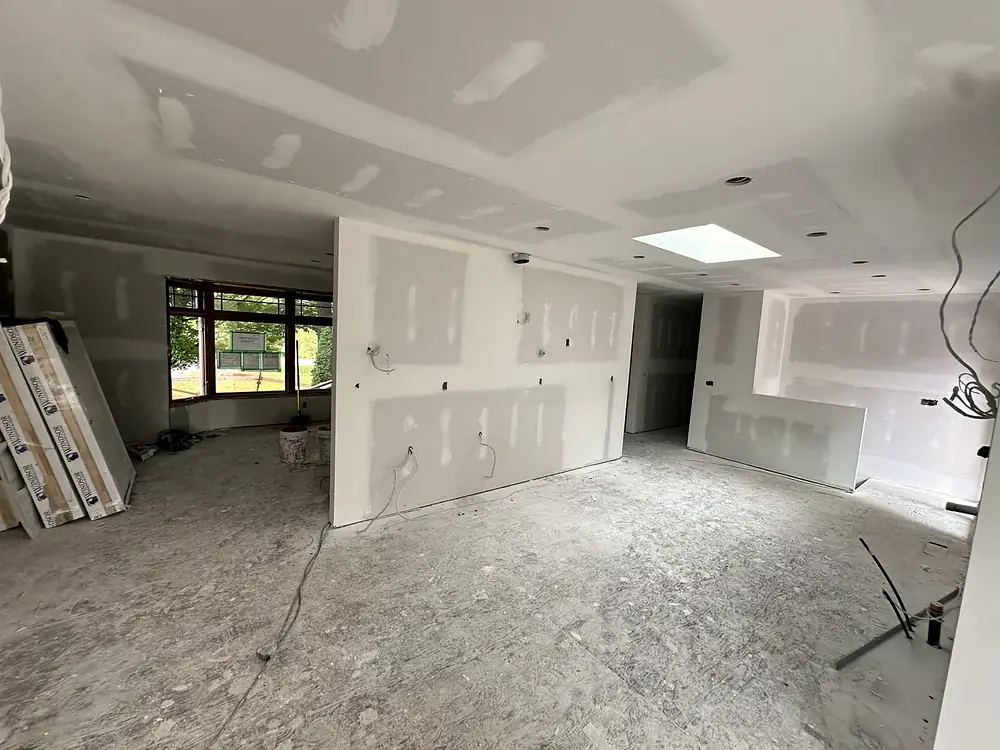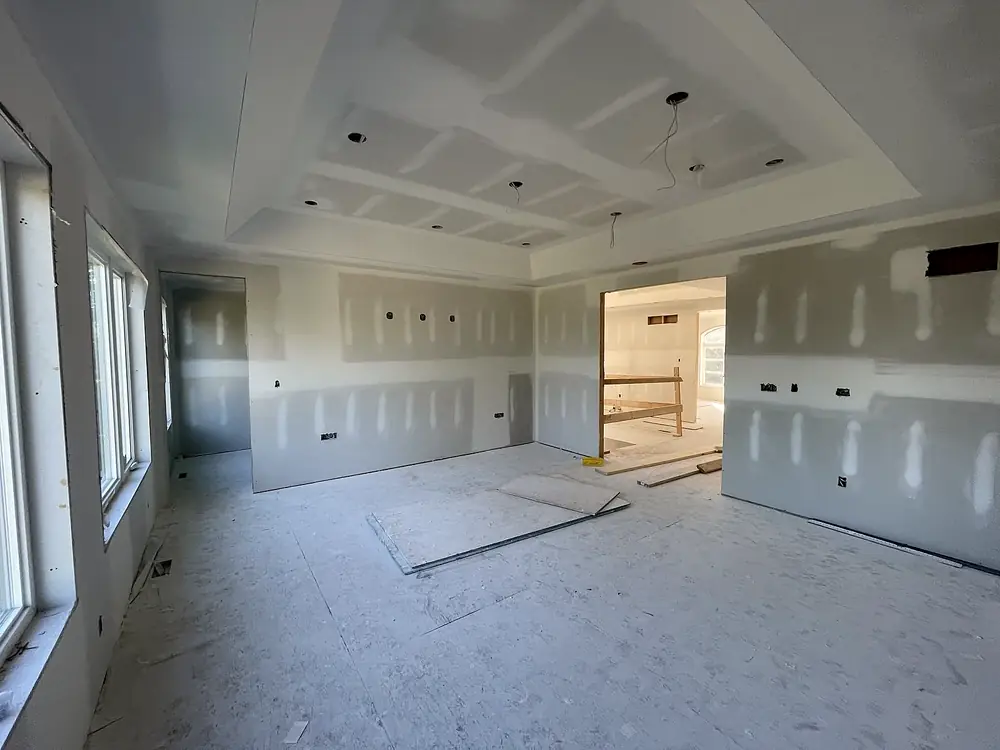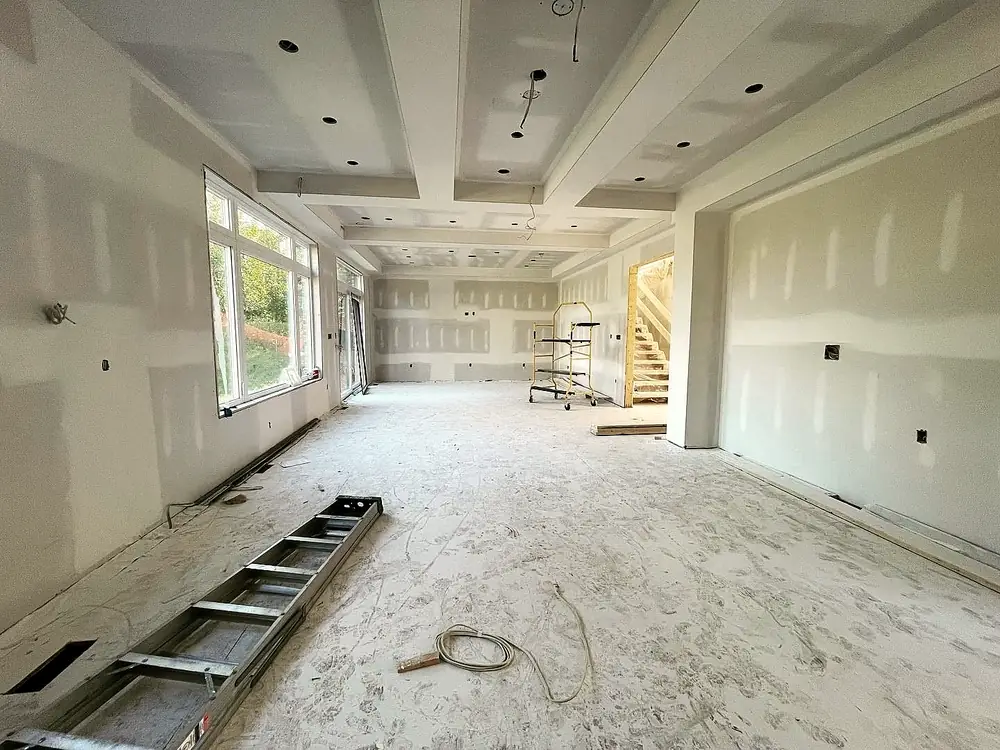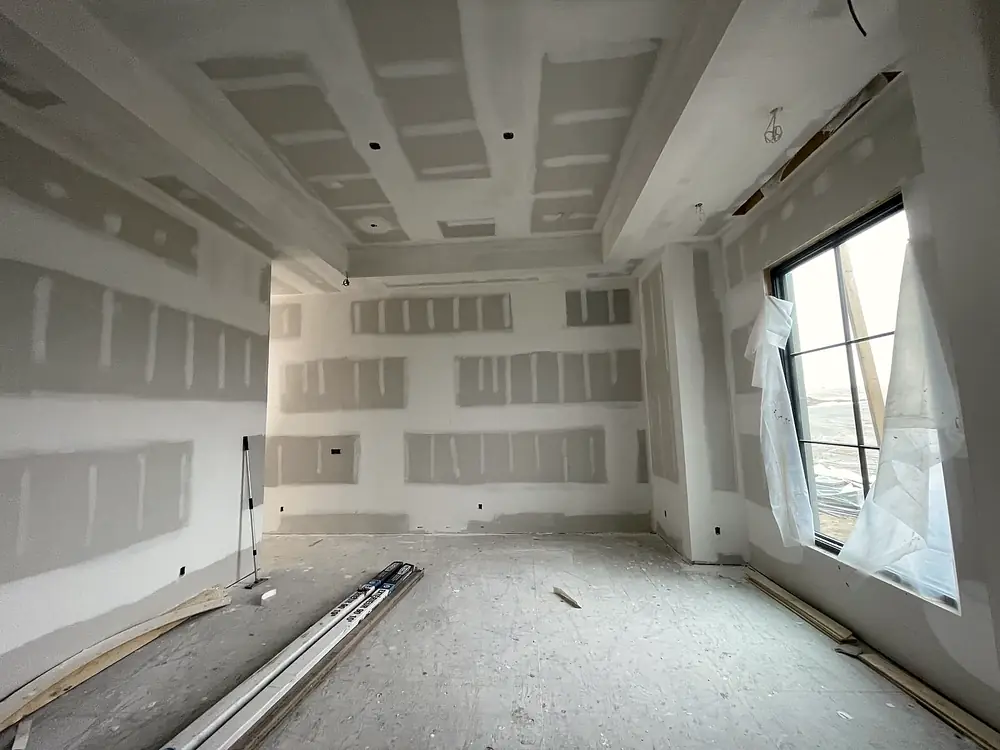
How we tape
- First coat: tape embedded in compound on every joint and corner.
- Drying time: a minimum of 24 hours per coat, more in cold or humid weather. Compound that isn't fully dry shrinks and cracks months later.
- Second coat: fill coat, feathered wider than the first.
- Third coat: finish coat, feathered to full width.
- Sanding between coats and after the final coat, checked with a light raked across the surface.
- Level 5 skim (if specified): a full surface skim coat plus a final sanding pass.
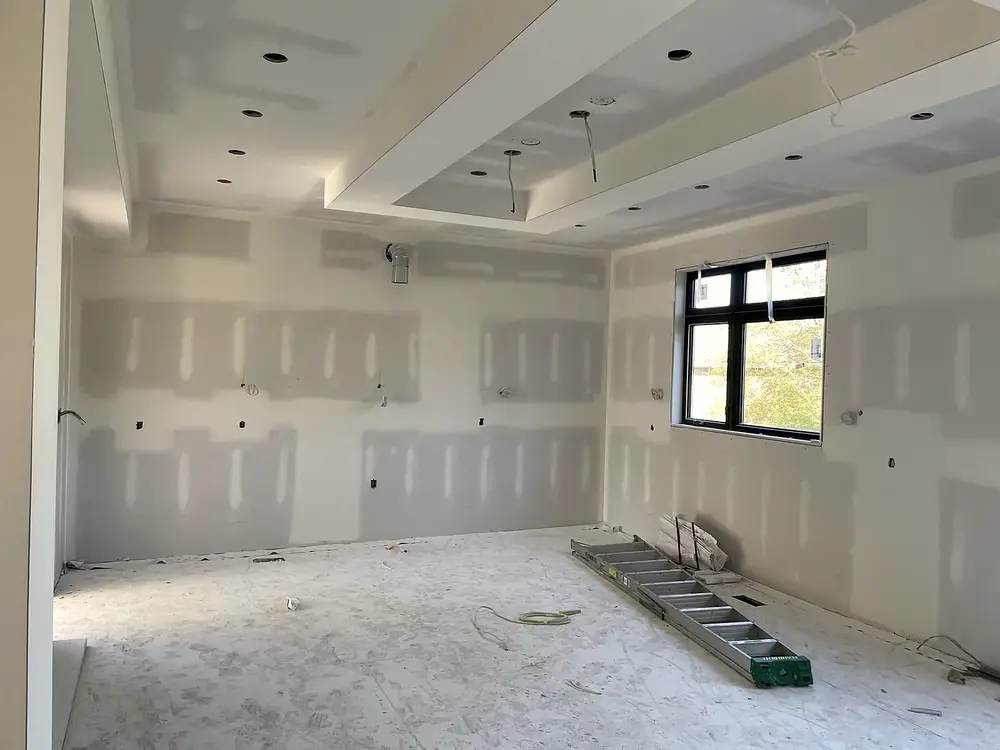
Level 4 or Level 5?
| Level | What it is | Use |
|---|---|---|
| Level 4 | Three coats, sanded smooth | Standard residential, flat paint |
| Level 5 | Level 4 plus a full skim coat over the whole surface | Custom homes, any paint sheen, raking light |
Level 5 adds roughly $0.75–$1.50 per sq ft and 2–4 working days. Read what is a Level 5 finish?
Textures
Smooth is the standard in most Halton homes today, but we also do skip trowel, orange peel and knockdown for character walls, ceilings or blending into existing finishes. See drywall texture types.
Winter and summer finishing
Below 13°C joint compound won't cure properly, so winter work needs the space heated before and during taping. Summer humidity in Halton slows drying too, so we plan fans and dehumidifiers rather than cutting corners.
Common questions
Why does taping take so long?
Each of the three coats needs at least 24 hours to dry before sanding and the next coat. Rushing it causes shrinkage and cracks that show up months later under paint.
Can you fix someone else's taping?
Often, yes. Visible joints under sheen paint are usually a Level 4 finish where Level 5 was needed, and a skim coat can fix it.
Do you paint?
Our focus is getting walls paint-ready. Tell us if you need painting and we'll discuss it on the call.