What we install
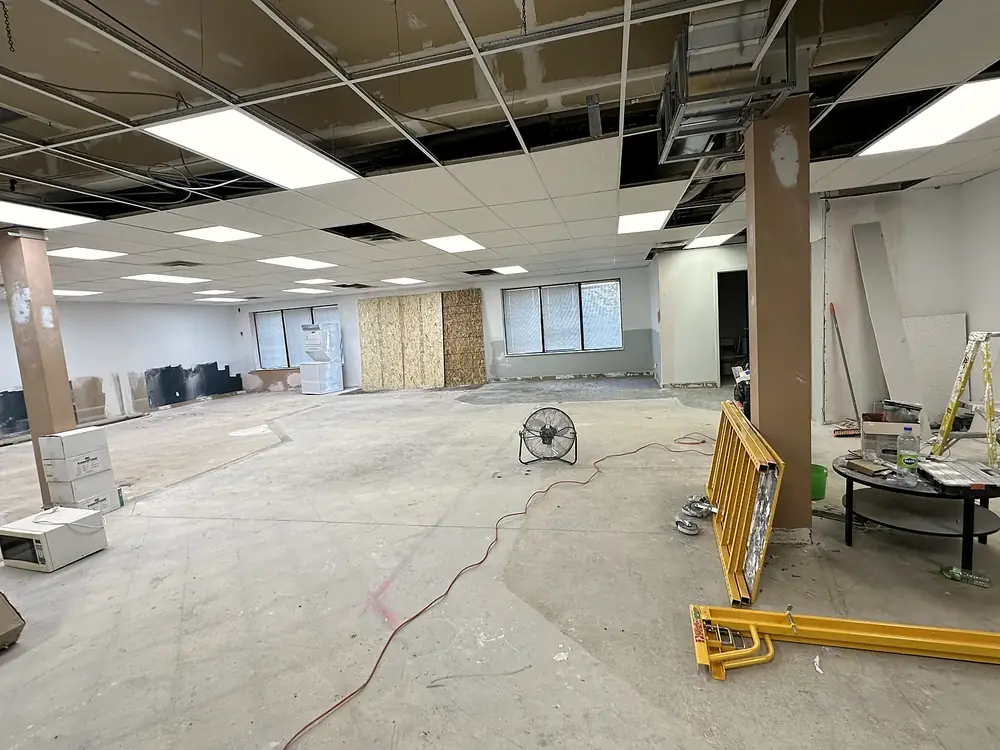
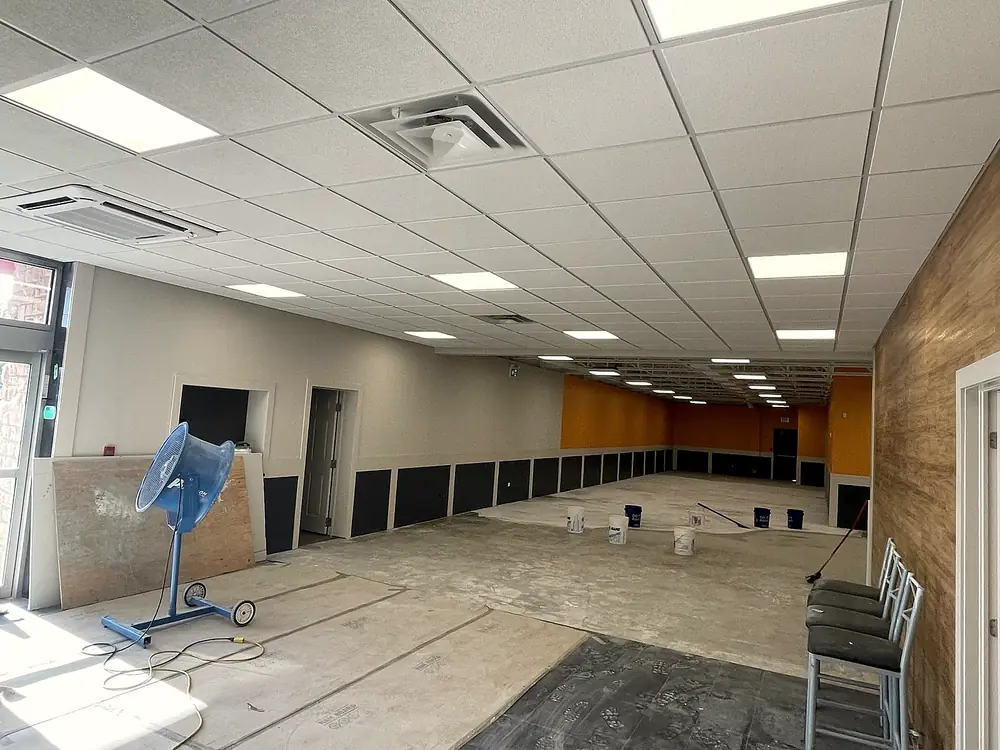
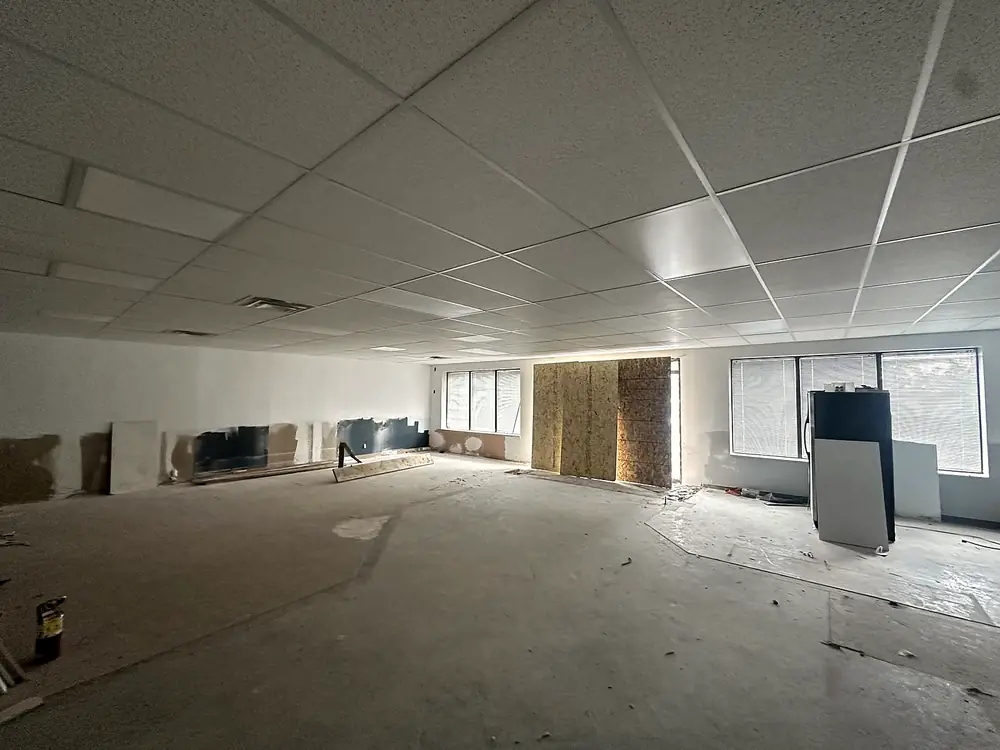
- Suspended grid: standard 15/16" and narrow 9/16" exposed tee, in the module and layout on your reflected ceiling plan.
- Acoustic tile: from standard mineral fibre to high-NRC and high-CAC panels for meeting rooms and private offices.
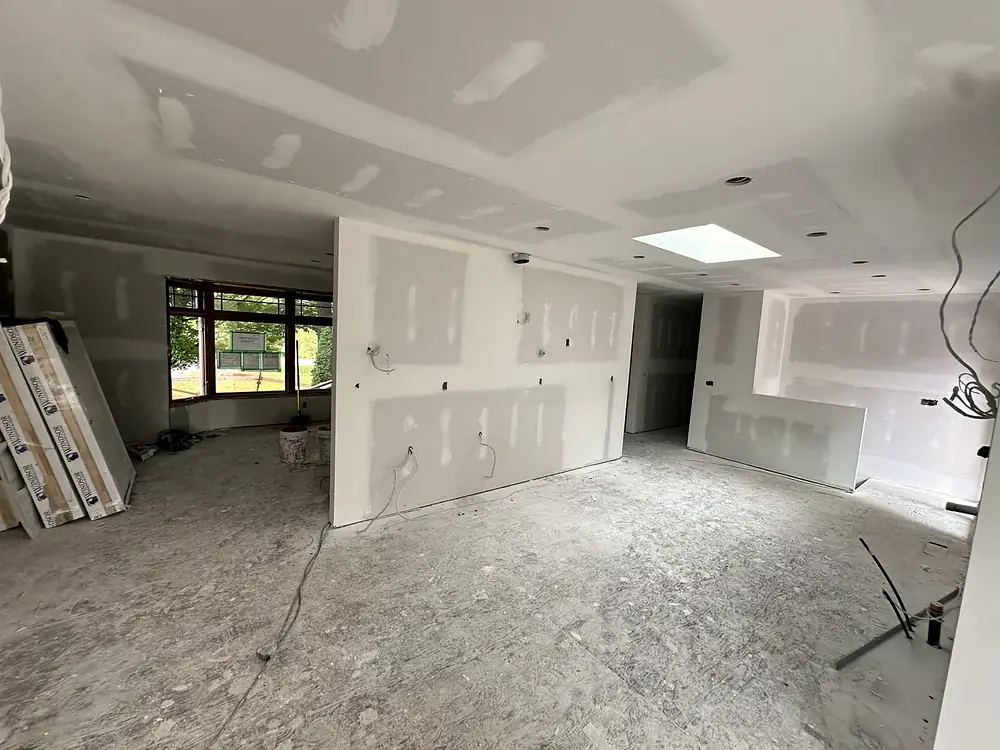
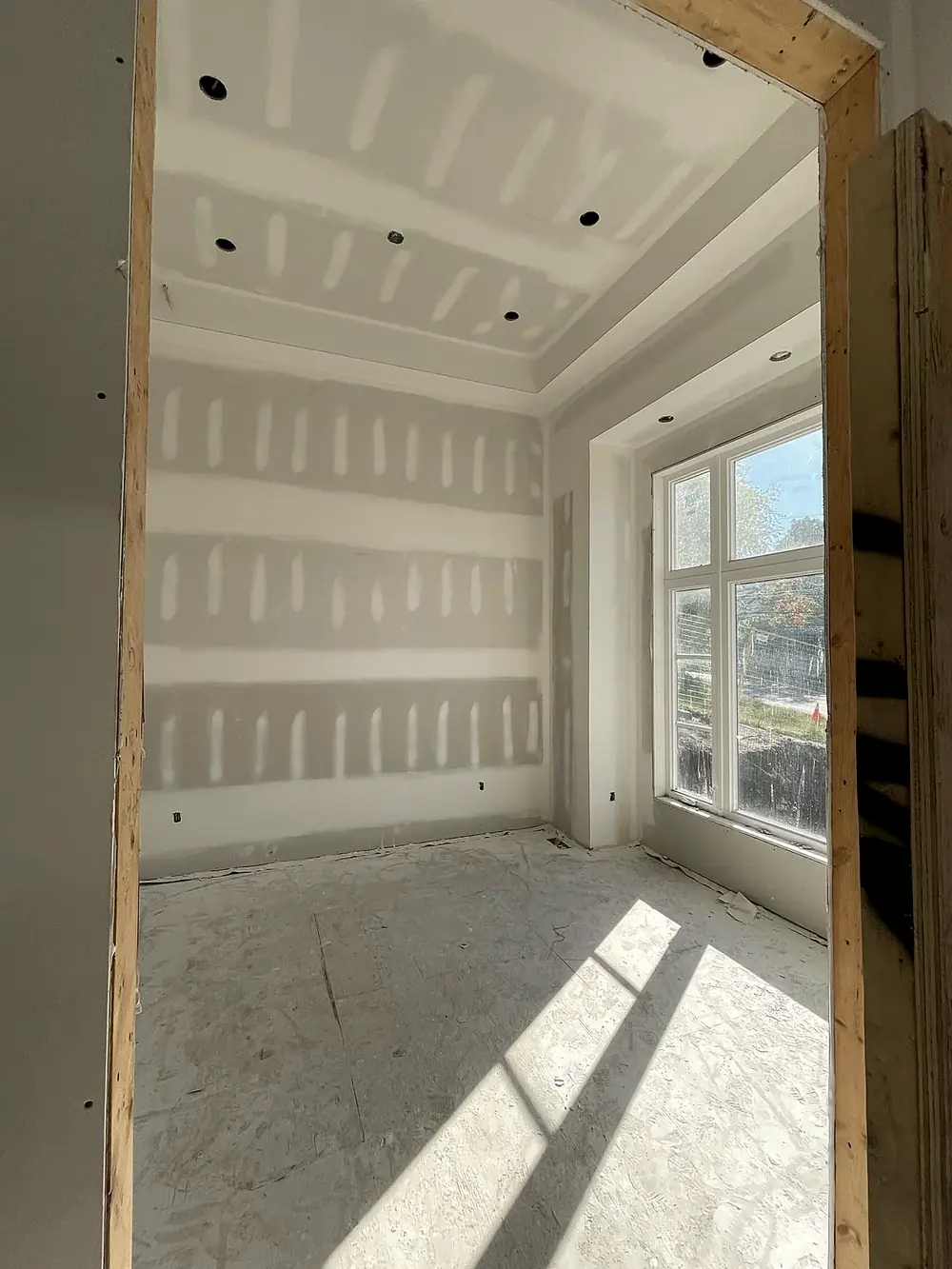
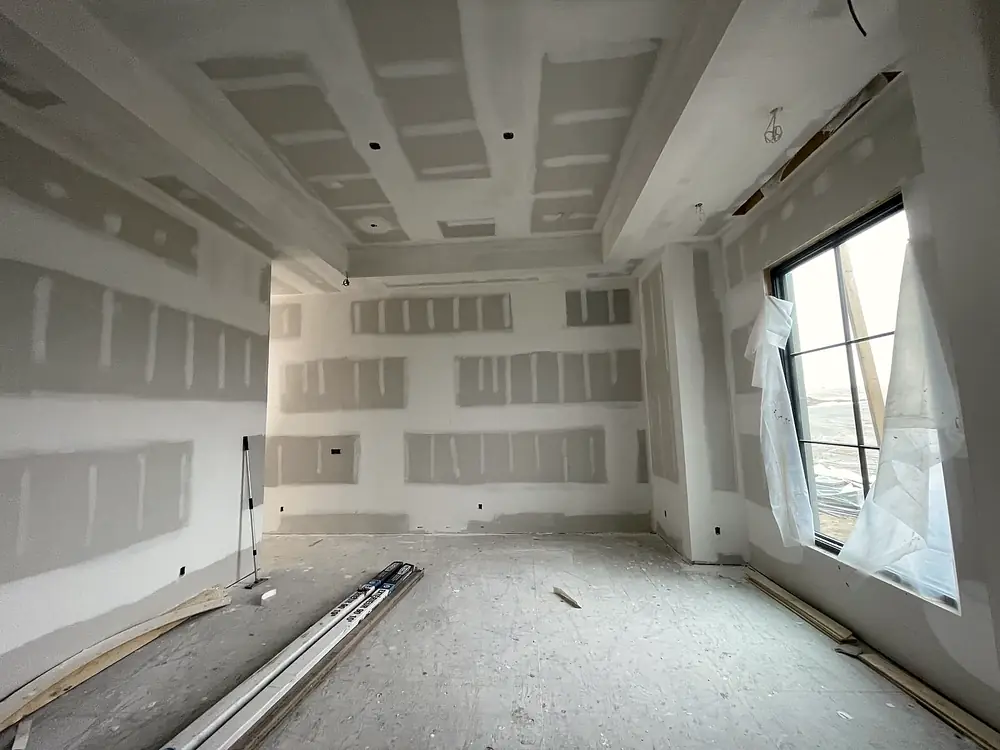
- Drywall-to-grid transitions: bulkheads, perimeter bands and soffits, built by the same crew as the walls.
- Re-grids and tile replacement for tenant turnovers, water-damaged tile and tired ceilings.
- Residential drop ceilings: see basement and home ceilings.
How we get a ceiling right
- Read the RCP. Confirm heights, grid module and starting lines so cut tiles land where the designer wants them, not against the main entrance.
- Coordinate above-ceiling trades. Grid goes in after mechanical, electrical and sprinkler mains; clashes with ducts or hangers are flagged early.
- Hang to a laser line. Hanger wire and main runners are set to a laser so the ceiling reads flat across the whole floor.
- Fixtures, then tile. Lights, diffusers and sprinkler heads centred per plan; tile goes in last, after dusty work, to stay clean.
NRC and CAC: the two numbers on a tile spec
NRC (Noise Reduction Coefficient) is how much sound a tile absorbs in the room. Higher NRC means less echo in open offices and retail floors. CAC (Ceiling Attenuation Class) is how well the ceiling blocks sound travelling over a wall into the next room. Higher CAC matters for private offices and boardrooms. Real privacy also needs the walls built for it; see office fit-outs.
Pricing
T-bar is quoted separately from drywall, by ceiling area, grid type and tile spec. For basements, LR's typical T-bar ceiling scope runs $2,000–$5,000. Commercial ceilings are priced from the reflected ceiling plan.
Common questions
Is a T-bar ceiling the same as a drop ceiling?
Yes. T-bar, suspended, drop and acoustic ceiling (ACT) all describe a grid hung below the structure with lay-in tiles.
Can you replace tiles in an occupied office?
Yes. Tile replacement and grid repairs can be scheduled around occupied space and building hours.
What's the difference between NRC and CAC?
NRC measures how much sound a tile absorbs within the room; CAC measures how well the ceiling blocks sound passing over a wall into the next room.