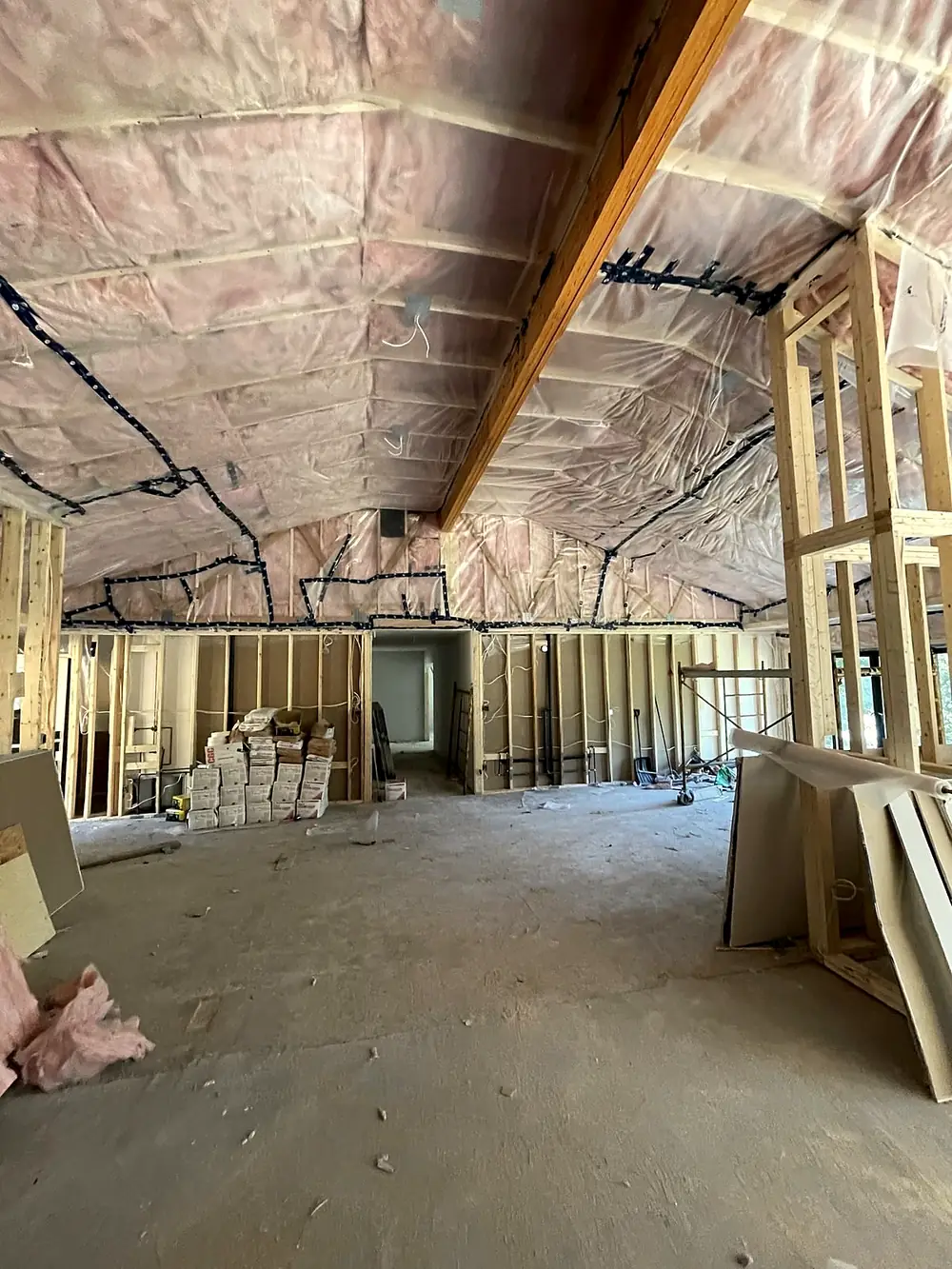
Spray foam vs batt
| Closed-cell spray foam | Batt (fibreglass / mineral wool) | |
|---|---|---|
| R-value per inch | R-6 to R-7 | R-3.5 to R-4 |
| Air sealing | Air-tight, no gaps around wires or pipes | Gaps possible |
| Vapour control | Acts as its own vapour barrier | Separate poly required |
| Installed cost | $5 – $8 per sq ft | $0.80 – $1.60 per sq ft |
| Best for | Rim joists, rooflines, foundation walls, additions | Interior partitions, standard wall cavities |
Open-cell spray foam (R-3.5 to R-4 per inch) is softer and suits interior sound dampening where vapour transmission is acceptable.
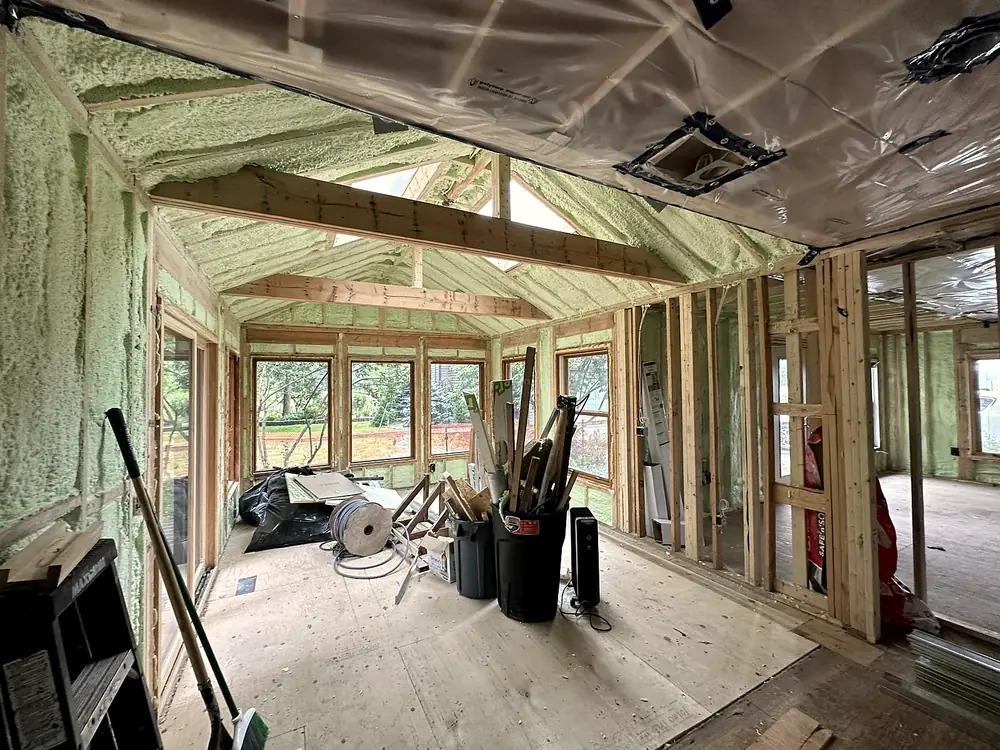
The hybrid approach
What most Halton custom-home clients choose: closed-cell spray foam on exterior walls, rooflines and rim joists, then mineral wool batt in interior partitions for sound control. You get the best thermal performance where it matters at a manageable total cost. For a 4,000 sq ft home:
- Full spray foam: $28,000 – $45,000
- Hybrid: $18,000 – $28,000
- Full batt: $8,000 – $14,000
Why insulation belongs with drywall
Insulation sits between trades, which is exactly why it goes wrong: gaps at outlets, compressed batts, torn poly, a missing sound batt in one wall. When the insulator and the drywaller are the same crew, the wall is checked once, properly, before it's closed. More in spray foam vs batt insulation.
Common questions
Is spray foam worth it?
Where it matters most (rim joists, rooflines, foundation walls, additions), closed-cell foam outperforms batt and seals air leaks. Interior walls rarely need it.
Do I still need a vapour barrier with spray foam?
Closed-cell spray foam acts as its own vapour barrier. Batt insulation needs a separate poly vapour barrier.
Do you do soundproofing insulation?
Yes. Mineral wool sound batts in interior walls and ceilings, combined with the right drywall assembly.